

Research
Bitcoin ETFs: The Bridge from Asset to Currency
For most of its early life, Bitcoin attracted the curious and the courageous. Direct ownership meant opening new accounts, managing wallets and private keys, and worrying about exchange security. Even if you cleared those hurdles, the price could swing wildly in hours. That mix of operational friction and volatility kept regular investors at a distance.
What ETFs Unlocked
Spot Bitcoin exchange-traded funds (ETFs) have changed the way to get started. With a brokerage account and a ticker, investors can now hold regulated, exchange-listed shares that track Bitcoin without new infrastructure or key management. The result is access that is clean, simple, and familiar to the broad investing public. It’s the difference between setting up self-custody from scratch vs typing a ticker in your regular brokerage app.
The ETF wrapper also solves real institutional constraints. Many pensions, endowments, and mutual funds sat on the sidelines for years, not because of a lack of interest, but because of custody rules, audit trails, and compliance mandates that didn’t fit the early crypto market. Regulated ETFs fit neatly into those frameworks. That’s why we’ve seen public filings and press reports that pensions have begun allocating to spot Bitcoin ETFs. This is one of the clearest signals that the investor base is broadening beyond crypto-native funds and family offices.
This institutionalization can be seen in scale. The iShares Bitcoin Trust (IBIT), launched in January 2024, has become the fastest growing ETF in history and as of early October 2025, has amassed roughly $95 billion in net assets. This is a level of AUM that indicates persistent demand for Bitcoin and the operational readiness of traditional finance to hold Bitcoin exposure via ETFs.
The ETF wrapper also solves real institutional constraints. Many pensions, endowments, and mutual funds sat on the sidelines for years, not because of a lack of interest, but because of custody rules, audit trails, and compliance mandates that didn’t fit the early crypto market. Regulated ETFs fit neatly into those frameworks. That’s why we’ve seen public filings and press reports that pensions have begun allocating to spot Bitcoin ETFs. This is one of the clearest signals that the investor base is broadening beyond crypto-native funds and family offices.
This institutionalization can be seen in scale. The iShares Bitcoin Trust (IBIT), launched in January 2024, has become the fastest growing ETF in history and as of early October 2025, has amassed roughly $95 billion in net assets. This is a level of AUM that indicates persistent demand for Bitcoin and the operational readiness of traditional finance to hold Bitcoin exposure via ETFs.
The ETF Engine: Value of Creation/Redemption Process
From a portfolio-management seat, ETFs’ creation/redemption mechanism is the unsung hero. When demand for the ETF rises, Authorized Participants (APs) can assemble baskets and create new shares while they can redeem shares for the underlying when demand falls. This arbitrage loop anchors the ETF to its net asset value and sends waves of investor demand into the underlying Bitcoin market in a scalable, auditable way.
Practically, that means big allocations can be executed with fewer market dislocations than in earlier cycles. Liquidity providers can store risk, APs can work baskets across time zones, and market makers can hedge exposures in futures or spot markets. As these pipes mature, you get fewer cliff moves and more steady price paths.
Practically, that means big allocations can be executed with fewer market dislocations than in earlier cycles. Liquidity providers can store risk, APs can work baskets across time zones, and market makers can hedge exposures in futures or spot markets. As these pipes mature, you get fewer cliff moves and more steady price paths.
Liquidity, Breadth, and Evolving Volatility
The launch of spot ETFs helped change the market’s plumbing. When ownership broadens from a relatively concentrated set of holders to a deeper mix of retail, advisors, and institutions, liquidity typically thickens. With more two-way flow, price discovery is less likely to have gaps, and volatility can go down. We’re seeing evidence of that.
Chart 1 shows that Bitcoin’s 30-day realized volatility has structurally decreased over the years, from 100% to 60% to 40%. It is now in the new low-volatility zone that started in May 2025.
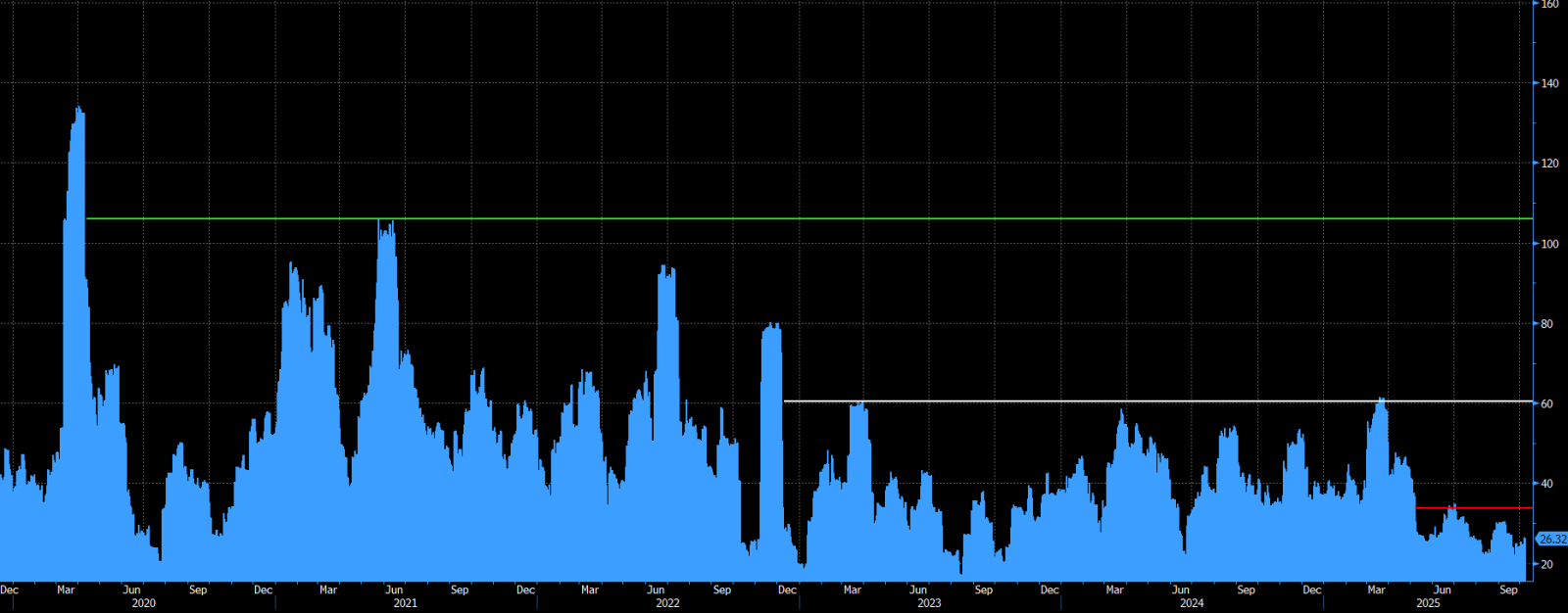
Chart 1 – Bitcoin’s 30-day realized volatility (Source: Bloomberg Intelligence)
In June 2025, ETF.com noted that the realized volatility of IBIT had dropped to levels comparable to the SPDR® S&P 500 ETF Trust (SPY) - a striking datapoint given Bitcoin’s history. A year prior, the same metric suggested Bitcoin was more than five times as volatile as U.S. equities. While the relationship between fund-level realized volatility and the underlying market is complicated, the direction of travel—toward lower volatility—lines up with what we observe on the desk: deeper liquidity, more creation/redemption activity, and a thicker limit order book.
Chart 1 shows that Bitcoin’s 30-day realized volatility has structurally decreased over the years, from 100% to 60% to 40%. It is now in the new low-volatility zone that started in May 2025.
Chart 1 – Bitcoin’s 30-day realized volatility (Source: Bloomberg Intelligence)
In June 2025, ETF.com noted that the realized volatility of IBIT had dropped to levels comparable to the SPDR® S&P 500 ETF Trust (SPY) - a striking datapoint given Bitcoin’s history. A year prior, the same metric suggested Bitcoin was more than five times as volatile as U.S. equities. While the relationship between fund-level realized volatility and the underlying market is complicated, the direction of travel—toward lower volatility—lines up with what we observe on the desk: deeper liquidity, more creation/redemption activity, and a thicker limit order book.
Why This Matters for “Money”
Economists typically describe three functions of money: (1) Medium of exchange, (2) Unit of account, (3) Store of value. Bitcoin has already served as a medium of exchange and unit of account within crypto-native ecosystems. The third function - store of value, had been harder to argue during periods of 70% drawdowns and week-to-week 20% swings.
Since spot Bitcoin ETFs launched, maximum drawdowns have been capped to 28%, which is a remarkable improvement against an average of 70% drawdown in previous 6 years (Chart 2). It is believed to be a strong indicator of rising strength in Bitcoin’s value and its acceptance to be widely perceived as store of value.
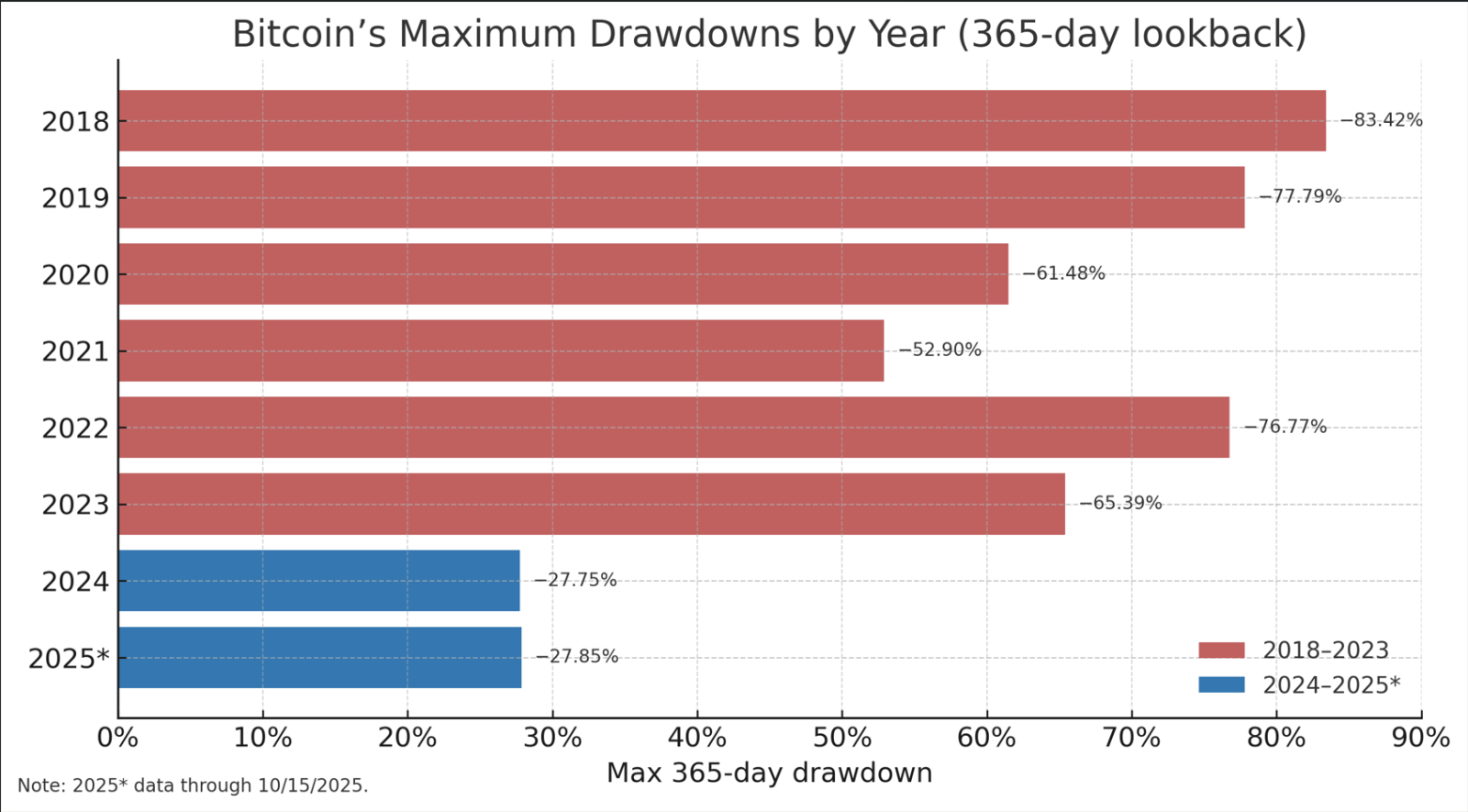
Chart 2 – Bitcoin’s Drawdowns (Source: Bloomberg Intelligence)
It can be argued that Bitcoin is still more volatile than major currencies, but it should be acknowledged that the nature of its volatility is changing – it is now less random and more linked to market structure. Its 30-day volatility is already at comparable levels between 0.5x and 2.5x to that of Argentine Peso, as shown in Chart 3 (volatility ratio averages 1.35x in last 6 months).
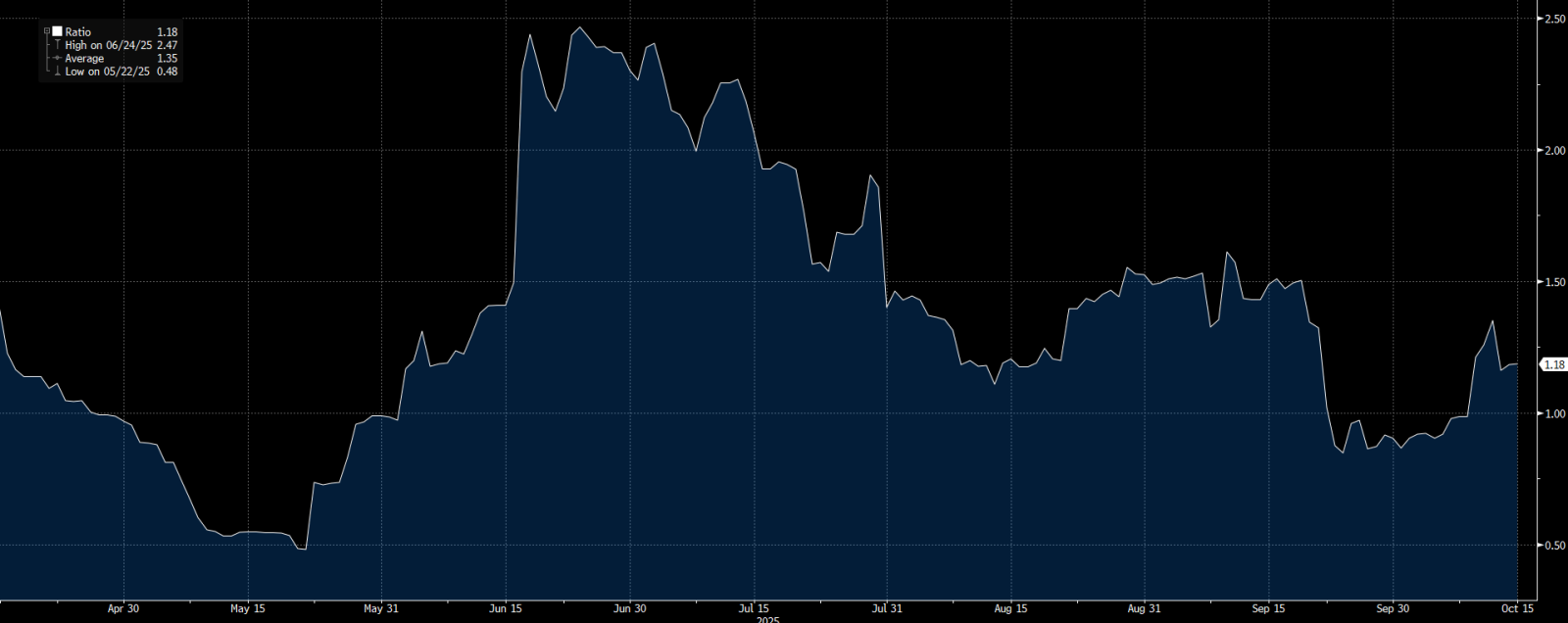
Chart 3 –Bitcoin to Argentine Peso’s 30-day Realized Volatility (Source: Bloomberg Intelligence)
Additionally, the number of merchants accepting Bitcoin as a source of payment is moving in a positive direction with 50% growth in last 1 year as tracked by BTCMap. More measured and smoother movements may make Bitcoin more practical for payments and savings. It cannot be denied that bitcoin has started to check all the right boxes since the launch of ETFs in adoption as a currency.
Since spot Bitcoin ETFs launched, maximum drawdowns have been capped to 28%, which is a remarkable improvement against an average of 70% drawdown in previous 6 years (Chart 2). It is believed to be a strong indicator of rising strength in Bitcoin’s value and its acceptance to be widely perceived as store of value.
Chart 2 – Bitcoin’s Drawdowns (Source: Bloomberg Intelligence)
It can be argued that Bitcoin is still more volatile than major currencies, but it should be acknowledged that the nature of its volatility is changing – it is now less random and more linked to market structure. Its 30-day volatility is already at comparable levels between 0.5x and 2.5x to that of Argentine Peso, as shown in Chart 3 (volatility ratio averages 1.35x in last 6 months).
Chart 3 –Bitcoin to Argentine Peso’s 30-day Realized Volatility (Source: Bloomberg Intelligence)
Additionally, the number of merchants accepting Bitcoin as a source of payment is moving in a positive direction with 50% growth in last 1 year as tracked by BTCMap. More measured and smoother movements may make Bitcoin more practical for payments and savings. It cannot be denied that bitcoin has started to check all the right boxes since the launch of ETFs in adoption as a currency.
The Halving, the “500-Day” Cycle, and What Comes Next
Supply issuance remains Bitcoin’s most unique monetary feature. The fourth halving occurred on April 20, 2024, cutting block rewards from 6.25 to 3.125 BTC. Historically, Bitcoin has performed best over the course of 12 to 18 months after halving events. This pattern is widely summarized as a “500-day cycle.” Whether that rhythm is causal or simply correlated with broader liquidity cycles is debated, but the timing is what it is: as of late October 2025, we’re now over 18 months post the halving.
The ownership mix is different this time. In prior cycles, supply-side tightening met a holder base dominated by crypto-native whales, retail momentum, and leverage from offshore venues. Today, supply-side dynamics are meeting regulated ETF pipes that can channel retirement accounts, model-portfolio sleeves, and advisory platforms into Bitcoin with a click.
Will post-halving rallies be smaller, or will steadier long-term buying make them last longer? The honest answer is that we don’t know yet. The evidence of volatility compression in IBIT suggests that institutionalization can smooth the ride. But Bitcoin is still a globally traded, 24/7 asset that reacts to macro liquidity, risk appetite, and policy signals. This means that sharp moves are always possible.
The ownership mix is different this time. In prior cycles, supply-side tightening met a holder base dominated by crypto-native whales, retail momentum, and leverage from offshore venues. Today, supply-side dynamics are meeting regulated ETF pipes that can channel retirement accounts, model-portfolio sleeves, and advisory platforms into Bitcoin with a click.
Will post-halving rallies be smaller, or will steadier long-term buying make them last longer? The honest answer is that we don’t know yet. The evidence of volatility compression in IBIT suggests that institutionalization can smooth the ride. But Bitcoin is still a globally traded, 24/7 asset that reacts to macro liquidity, risk appetite, and policy signals. This means that sharp moves are always possible.
The Bottom Line for Investors
From my seat managing portfolios for crypto ETFs that are among the world’s largest holders of Bitcoin, Ether, and Solana Futures, here’s what I learned:
- ETFs have democratized access. For retail, the experience is as simple as buying any other fund. For institutions, the wrapper solves custody, audit, and compliance - unlocking capital that was previously constrained.
- The market is becoming more liquid and less volatile. We’re observing fewer sudden jumps and more structure-linked moves. This is an extraordinary change vs prior years.
- The store-of-value case is getting stronger. Less operational friction and more stable price behavior reduces the concerns on using Bitcoin as savings, bringing it closer to being a medium of exchange, unit of account, and store of value.
The open question that we’ll all be watching into early 2026 is whether the classic halving-cycle narrative still defines the path of returns, or whether the new reality of institutional flows through ETFs rewrites the playbook. The next six months should be a revealing test of which force dominates - the historical halving driven supply pattern or the steadier hand of institutional demand. Evolution is happening either way, and it marks the beginning of Bitcoin’s role not only as an investment, but as a currency the world takes seriously.
About the Author
Yash Jain is an Associate Portfolio Manager at Volatility Shares, the sponsors of the world’s biggest crypto futures-based ETFs. Volatility Shares offers investors access to leveraged exposure of Bitcoin, Ether, Solana, and XRP through regulated fund structures. Yash is a CFA Charterholder and specializes in portfolio construction across volatility-linked and crypto-linked strategies.
Important Information
Spot Bitcoin ETPs are not registered under the Investment Company Act of 1940 (or the '40 Act) and therefore are not subject to the same regulations and protections as 1940 Act registered ETFs and mutual funds.
Bitcoin is a new technological innovation with a limited history. There is no assurance that usage of bitcoin will continue to grow. A contraction in use of bitcoin may result in increased volatility or a reduction in the price of bitcoin, which could adversely impact the value of a Fund linked to bitcoin. Bitcoin trading prices are volatile, and shareholders could lose all or substantially all of their investment in a Fund linked to bitcoin. Speculators and investors who seek to profit from trading and holding bitcoin generate a significant portion of bitcoin demand. Bitcoin speculation regarding future appreciation in the value of bitcoin may inflate and make more volatile the price of a bitcoin. As a result, bitcoin may be more likely to fluctuate in value due to changing investor confidence in future appreciation in the price of bitcoin.
For information about Volatility Shares please visit volatilityshares.com.
Investing involves risk; Principal loss is possible.
An investor should consider the investment objectives, risks, and charges and expenses of a fund carefully before investing. A prospectus or summary prospectus which contains this and other information about Volatility Shares ETFs may be obtained by calling 866-261-0273. Read it carefully before investing.
Foreside Fund Services, LLC is the distributor of the Volatility Shares ETFs.
Bitcoin is a new technological innovation with a limited history. There is no assurance that usage of bitcoin will continue to grow. A contraction in use of bitcoin may result in increased volatility or a reduction in the price of bitcoin, which could adversely impact the value of a Fund linked to bitcoin. Bitcoin trading prices are volatile, and shareholders could lose all or substantially all of their investment in a Fund linked to bitcoin. Speculators and investors who seek to profit from trading and holding bitcoin generate a significant portion of bitcoin demand. Bitcoin speculation regarding future appreciation in the value of bitcoin may inflate and make more volatile the price of a bitcoin. As a result, bitcoin may be more likely to fluctuate in value due to changing investor confidence in future appreciation in the price of bitcoin.
For information about Volatility Shares please visit volatilityshares.com.
Investing involves risk; Principal loss is possible.
An investor should consider the investment objectives, risks, and charges and expenses of a fund carefully before investing. A prospectus or summary prospectus which contains this and other information about Volatility Shares ETFs may be obtained by calling 866-261-0273. Read it carefully before investing.
Foreside Fund Services, LLC is the distributor of the Volatility Shares ETFs.